
Technology
ATP Text Meaning: What It Really Stands For in Chats

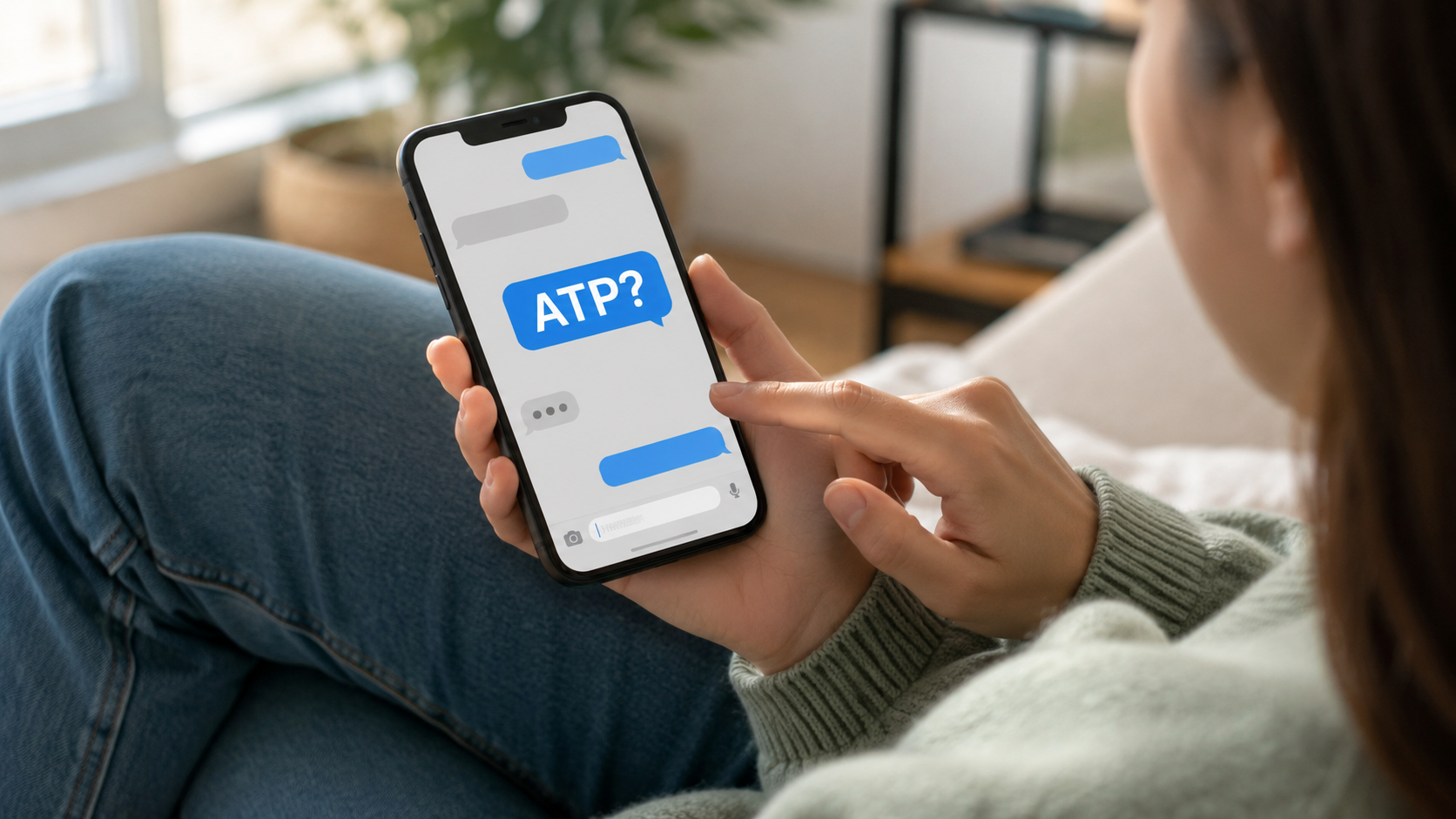
If you’ve been texting with a friend, a partner, or your kid and suddenly saw “ATP” pop up with no explanation, you’re not alone. It’s one of those short acronyms that looks simple but can mean two completely different things depending on the conversation. Getting it wrong can leave you confused about whether someone’s venting about a bad day or literally asking you to pick up the phone.
Here’s a clear breakdown of what ATP means in texting, where it comes from, and how to figure out which meaning applies in the moment.
Direct Answer
ATP in texting most commonly stands for “At This Point,” used to express frustration, a change of mind, or a current feeling. It can also mean “Answer The Phone,” typically used when someone wants a call picked up urgently. The correct meaning depends entirely on the context of the conversation, since both are common in casual texting and social media.
The Two Main Meanings of ATP in Text
At This Point
This is the meaning you’ll see most often, especially on social media and in casual texting among younger users. “At this point” is used the same way people might say “honestly” or “at this stage of things.” It usually signals a shift in mood, patience, or opinion.
Example: “ATP, I’m just going to cancel the plans.”
This means the person has reached a point where they’ve decided something, often after getting tired of waiting or dealing with a situation. It carries a slightly exasperated tone, similar to saying “honestly, at this rate” out loud.
Answer the Phone
The second meaning is more literal and usually more urgent. When someone texts “ATP,” they might be asking the recipient to pick up an incoming or upcoming call.
Example: “Call you in 2 min, ATP!”
This version shows up often when someone has been trying to reach a person by phone and wants to make sure the message gets through quickly. It’s short, direct, and typically used when a regular call or ring hasn’t gotten a response.
How to Tell the Difference
Since ATP can mean two very different things, context is the best clue. A few patterns can help:
- If the sentence sounds like an opinion, feeling, or decision, it likely means “at this point.” Words like “honestly,” “done,” or “over it” often appear nearby.
- If the message is short, urgent, and paired with mentions of a call, ring, or phone, it likely means “answer the phone.”
- Platform matters too. On TikTok or Instagram captions and comments, “at this point” is the far more common use. In direct one-on-one texts between people who talk on the phone regularly, “answer the phone” is more likely.
When in doubt, the safest move is simply asking the sender what they meant. Slang shifts quickly, and even close friends sometimes use acronyms differently.
Where ATP Slang Came From
Like most modern texting acronyms, ATP developed organically through casual online conversation rather than through any official origin. Acronyms like this tend to spread through social media platforms, get picked up by younger users, and eventually become common enough that they show up in everyday texting outside of any single app or trend.
“At this point” as a phrase has long been used in regular spoken English to express a build-up of frustration or a final decision after a series of events. Shortening it to ATP fits naturally into fast-paced texting and short-form social media captions, where space and time are limited. “Answer the phone” likely developed the same way, as a quick way to flag urgency without typing out a full sentence.
ATP Outside of Texting Slang
It’s worth knowing that ATP has several completely unrelated meanings outside of texting and social media, which is part of why the acronym can be confusing at first glance.
Adenosine Triphosphate
In biology and chemistry, ATP refers to adenosine triphosphate, a molecule that cells use to store and transfer energy. It’s often described as the primary energy currency of the cell, powering everything from muscle contraction to nerve signaling. Anyone who’s taken a biology class has likely encountered this version of ATP long before ever seeing it in a text message.
Association of Tennis Professionals
ATP is also the name of the governing body for men’s professional tennis, overseeing tournaments like the ATP Tour and ATP Masters events. Sports fans searching “ATP” are often looking for tennis rankings or match schedules rather than texting slang.
Other Technical and Organizational Uses
ATP shows up as an abbreviation in various technical and professional fields as well, including automated theorem proving in computer science and assistive technology practitioner certifications in rehabilitation and accessibility work. These uses are far less common in everyday conversation but do appear in specific professional contexts.
Because the acronym has so many unrelated meanings, the surrounding conversation is really the only reliable way to know which one applies.
Common Mistakes People Make With ATP
A few misunderstandings come up repeatedly when people first encounter this slang:
- Assuming there’s only one meaning. Many people learn “at this point” first and get confused when someone uses it to mean “answer the phone” instead.
- Overthinking single-letter acronyms. Because ATP is short, it can feel like it should have one universal meaning, but like many texting acronyms, it depends heavily on context.
- Missing the tone. “At this point” often carries frustration or resignation. Reading it as neutral can cause someone to miss that the sender is upset or has reached a limit.
- Confusing it with the biology term. Outside of texting, ATP almost always refers to adenosine triphosphate in academic or scientific writing, which has nothing to do with the slang usage.
Real-World Examples
A teenager texting a friend might write, “ATP I don’t even care what he says anymore,” clearly using the “at this point” meaning to express that they’ve given up on being bothered by a situation. In a different scenario, someone waiting for an important call might text, “Answering in 5, ATP!” right before their phone starts ringing, using the “answer the phone” meaning instead. Meanwhile, a student writing a biology lab report would use ATP in an entirely different sense, describing how mitochondria produce it during cellular respiration. Three completely different meanings, all sharing the same three letters.
Key Facts
- ATP most commonly means “At This Point” in text and social media slang.
- The second common texting meaning is “Answer The Phone.”
- Context and platform both help determine which meaning applies.
- Outside of slang, ATP also refers to adenosine triphosphate in biology and the Association of Tennis Professionals in sports.
- The slang meanings developed informally through casual online use rather than any official source.
Frequently Asked Questions
Q1: What does ATP mean in a text message?
Ans: It usually means “At This Point,” used to express frustration or a decision. It can also mean “Answer The Phone” in more urgent, call-related contexts.
Q2:Is ATP rude or offensive?
Ans: No. It’s generally harmless slang, though the tone can come across as impatient or blunt depending on how it’s used.
Q3:Does ATP mean the same thing on every platform?
Ans: Not necessarily. “At this point” is more common on social media captions and comments, while “answer the phone” tends to show up more in direct texting between people who talk by phone.
Q4:How do I know which meaning someone intends?
Ans: Look at the rest of the message. Mentions of frustration, decisions, or opinions point to “at this point.” Mentions of calls or urgency point to “answer the phone.”
Q5:Does ATP have a meaning outside of texting?
Ans: Yes. In biology, ATP stands for adenosine triphosphate, a molecule involved in cellular energy. In sports, it refers to the Association of Tennis Professionals.
Q6:Is ATP slang mainly used by younger people?
Ans: It’s most common among teens and younger social media users, though it has spread widely enough that people of many ages now recognize and use it in casual texting.
Key Takeaways
- ATP in texting most often means “At This Point.”
- A second common meaning is “Answer The Phone.”
- Context, tone, and platform all help clarify which meaning is intended.
- ATP also has unrelated meanings in biology and professional tennis.
- When the meaning isn’t clear, asking the sender directly is the simplest solution.
Conclusion
ATP is a small acronym with a surprisingly wide range of meanings, from casual texting slang to biology class vocabulary to professional tennis. In everyday conversations, it almost always comes down to either “at this point” or “answer the phone,” and paying attention to the surrounding message usually makes the intended meaning obvious.
Area Code 505: Everything You Need to Know
If a call or text shows up from area code 505, you might wonder where it’s coming from and whether you can trust it. This code shows up often in daily life across the American Southwest, so it’s worth knowing exactly what it represents and how it works.
Area code 505 has been around since the earliest days of the North American telephone system, and it still plays a major role in one state’s communication network today. Below, you’ll find a clear breakdown of where this code is used, why it exists, and what to keep in mind if you spot it on your caller ID.
Direct Answer: Where Is Area Code 505?
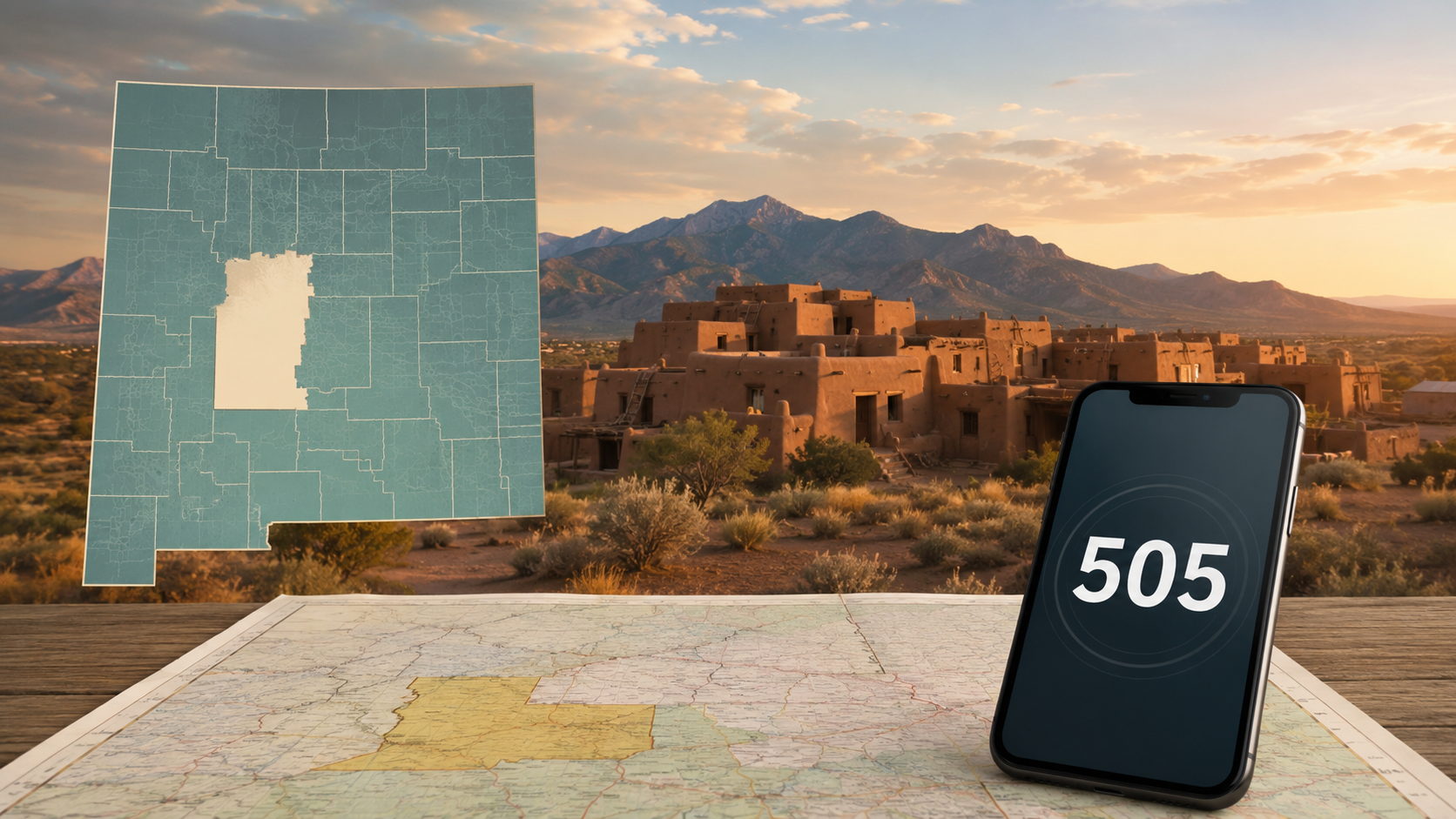
Area code 505 belongs to the state of New Mexico. It covers the northwestern and central parts of the state, including the Albuquerque metro area, Santa Fe, Rio Rancho, Farmington, and Gallup. It was one of the original 86 area codes created in 1947 and originally covered all of New Mexico before the state split off a second code, 575, in 2007. Today, 505 serves roughly a dozen counties and over a million residents.
A Quick Background on Area Code 505
When the telephone industry created the first nationwide numbering plan in 1947, each state or region received a single area code to cover all its long-distance routing. New Mexico was assigned 505, and because the state had a relatively small population at the time, one code was enough to handle every phone number within its borders.
That single-code arrangement lasted for six decades. As more households added second phone lines, fax machines, pagers, and eventually cell phones and internet-connected devices, the supply of available phone numbers within 505 began running low. New Mexico’s Public Regulation Commission debated the best way to add capacity for years, weighing whether to split the state geographically or introduce an overlay, which would let two area codes share the same region without anyone changing numbers.
In 2007, the state settled on a geographic split. The newer code, 575, took over the southern and eastern portions of New Mexico, while 505 stayed with the northwestern and central areas that already had the highest population density. That’s why 505 today is smaller in land area than it once was, even though it still covers the state’s biggest cities.
Which Cities and Counties Does 505 Cover?
Area code 505 is centered on Albuquerque, New Mexico’s largest city, and extends outward to cover a wide stretch of the state’s most populated corridor. Major cities and communities within the 505 region include:
- Albuquerque
- Santa Fe
- Rio Rancho
- Farmington
- Gallup
- Los Lunas
- Las Vegas, New Mexico
The code spans roughly a dozen counties, including Bernalillo, Santa Fe, San Juan, McKinley, and Rio Arriba counties. Bernalillo County, home to Albuquerque, accounts for the largest share of the population served by this code.
Santa Fe deserves a special mention here. As New Mexico’s capital and one of the oldest cities in the country, founded in 1610, Santa Fe sits at a high elevation in the foothills of the Sangre de Cristo Mountains. It’s a cultural and government hub, and its long-distance calls, along with Albuquerque’s, make up a large share of all 505 traffic.
Time Zone and Dialing Basics
Everywhere within area code 505 falls in the Mountain Time zone. That means Mountain Standard Time (UTC−7) for most of the year, switching to Mountain Daylight Time (UTC−6) during daylight saving time, which runs from the second Sunday in March through the first Sunday in November.
To call a 505 number from elsewhere in the United States, dial 1, then 505, then the seven-digit local number. From outside the country, you’ll need to add the appropriate international exit code before the U.S. country code, 1.
One historical quirk worth knowing: because 505 was created before area codes commonly used digits other than 0 or 1 in the middle position, its structure reflects an older layer of the numbering system. That’s part of why telecom researchers and hobbyists often point to 505 as a good example of an “original” area code, one of the first batch ever issued in North America.
Why Area Code 505 Matters Today
Area code 505 isn’t just a routing tool for phone companies. It’s tied closely to how people in central and northwestern New Mexico identify themselves and their businesses. A local business using a 505 number signals to customers that it’s rooted in the Albuquerque or Santa Fe area, which can build trust with people who prefer working with local companies over out-of-state call centers.
For residents, the code also plays a role in something less obvious: emergency services. In 2020, the 988 dialing code was designated nationwide as the number for the National Suicide Prevention Lifeline. Because area code 505 had numbers already assigned using the 988 exchange, the region had to transition fully to ten-digit dialing by October 2021 to avoid conflicts. This means that within 505, you now need to dial the full area code plus the seven-digit number for every local call, even calls to a neighbor down the street.
Common Mistakes and Misconceptions
A few misunderstandings about area code 505 come up often enough to be worth clearing up directly.
Mistake: Assuming 505 is a scam code. Area code 505 is a standard, legitimate U.S. area code. Scammers can spoof any area code, including 505, to make calls look local. The area code itself doesn’t indicate fraud; the behavior of the caller does.
Mistake: Thinking 505 covers all of New Mexico. This was true from 1947 to 2007, but it hasn’t been accurate for close to two decades. Southern and eastern New Mexico now use area code 575.
Mistake: Believing 505 is in Texas. Because New Mexico borders Texas and shares some cultural and geographic similarities, people occasionally assume 505 is a Texas code. It is not. It belongs entirely to New Mexico.
Mistake: Assuming seven-digit dialing still works. Since the shift tied to the 988 lifeline number, all local calls within 505 require ten-digit dialing, including the area code.
Real-World Examples
Here’s how area code 505 shows up in everyday situations:
A small coffee roasting business in Albuquerque lists a 505 number on its website. Local customers see the area code and immediately recognize it as a neighborhood business rather than a national chain, which builds a bit of familiarity before the call even connects.
A remote worker who grew up in Santa Fe moves to another state but keeps her original 505 cell number instead of switching to a local one in her new city. Thanks to number portability rules established under the Telecommunications Act of 1996, she can keep her area code no matter where she physically lives, and friends and family back home still recognize it as “her number.”
A resident in Rio Rancho gets a call from an unfamiliar 505 number claiming to be a government agency asking for personal information. Because scammers frequently spoof local area codes to appear more trustworthy, the safest move is to hang up and contact the agency directly using a verified number, rather than assuming the call is legitimate just because it shows a local area code.
Key Facts About Area Code 505
- Area code 505 serves New Mexico, primarily the Albuquerque and Santa Fe regions.
- It went into service in 1947 as one of the original 86 North American area codes.
- It served the entire state of New Mexico until October 2007.
- Area code 575 was created in 2007 to cover southern and eastern New Mexico.
- The region operates on Mountain Time (MST/MDT).
- Ten-digit dialing became mandatory in 505 in October 2021 due to the nationwide 988 lifeline code.
- Major cities in the 505 region include Albuquerque, Santa Fe, Rio Rancho, Farmington, and Gallup.
- New Mexico currently has two area codes total: 505 and 575.
Frequently Asked Questions
Q1:What state is area code 505 in?
Ans: Area code 505 is in New Mexico. It covers the northwestern and central part of the state, including Albuquerque and Santa Fe.
Q2:Is area code 505 the same as area code 575?
Ans: No. They’re separate area codes covering different parts of New Mexico. 505 covers the north-central and northwestern regions, while 575 covers the south and east, following a 2007 split.
Q3:Why do I need to dial 10 digits for local calls in area code 505?
Ans: Ten-digit dialing became required in October 2021 after the 988 Suicide and Crisis Lifeline was assigned nationwide. Because 505 already had numbers using that same three-digit combination, seven-digit local dialing could no longer work without confusion.
Q4:Is a call from area code 505 safe?
Ans: An area code by itself doesn’t determine whether a call is safe. Scammers can spoof any area code, including 505, to appear local. Treat unexpected calls asking for personal or financial information with caution regardless of the area code shown.
Q5:Can I get a 505 phone number if I don’t live in New Mexico?
Ans: Yes. Many virtual phone number providers let individuals and businesses obtain a 505 number regardless of where they’re physically located, often to establish a local presence for a business or personal reasons.
Q6: How many area codes does New Mexico have?
Ans: New Mexico currently has two area codes: 505 and 575.
Key Takeaways
- Area code 505 covers north-central and northwestern New Mexico, including Albuquerque and Santa Fe.
- It’s one of the original 86 area codes established in 1947 and once covered the entire state.
- The 2007 split created area code 575 for the rest of New Mexico.
- Ten-digit dialing is required throughout 505 since 2021.
- The area code itself is not a reliable indicator of whether a call is a scam.
Conclusion
Area code 505 carries nearly 80 years of history, starting as a single code for an entire state and narrowing over time to reflect where New Mexico’s population actually lives today. Whether you’re trying to figure out where a call came from, setting up a local business number, or just curious about how area codes evolve, 505 offers a clear example of how a numbering system adapts to growth, technology changes, and shifting population patterns. Understanding what it covers and how it works can help you make sense of the calls and numbers you encounter from this part of the Southwest.


Sam Huntington: Career, Roles, and Life Today

Jason London: Career, Life, and Notable Roles

Ronaldo Net Worth: How Rich Is Cristiano Ronaldo?

Is Netanyahu Dead? The Viral Rumor, the Facts, and How It Spread

How to Unclog a Toilet: Proven Methods That Actually Work

Trump appoints Erika Kirk Air Force: Fact Check, Context, and What’s Actually Known
-
 Politics4 months ago
Is Netanyahu Dead? The Viral Rumor, the Facts, and How It Spread
-
 Home4 months ago
How to Unclog a Toilet: Proven Methods That Actually Work
-
 News4 months ago
Trump appoints Erika Kirk Air Force: Fact Check, Context, and What’s Actually Known
-
 Technology2 months ago
Area Code 505: Location, Cities & Full Guide
-

 Lifestyle4 months ago
Semicolon Tattoo Meaning: What It Represents and Why People Get It
-

 Celebrity News4 months ago
Hannah Selleck: Who She Is, Her Equestrian Career, and Life Beyond Hollywood
-

 Lifestyle2 months ago
Hailey Summers: Who Is Shai Gilgeous-Alexander’s Wife?
-

 Sports2 months ago
Maryland vs Wisconsin: 2026 Game Recap and Key Stats