
Entertainment
Exploding Trees: What Causes This Winter Phenomenon

Introduction
If you’ve ever been outside on a brutally cold night and heard a loud crack that sounded like a gunshot, you may have witnessed what people call an “exploding tree.” Videos of this phenomenon tend to go viral every winter when a deep freeze hits, and the dramatic name makes it sound like trees are shattering into pieces. The real explanation is a little less cinematic, but still genuinely interesting, and understanding it can help you figure out whether a cracked tree in your yard needs attention.
Direct Answer
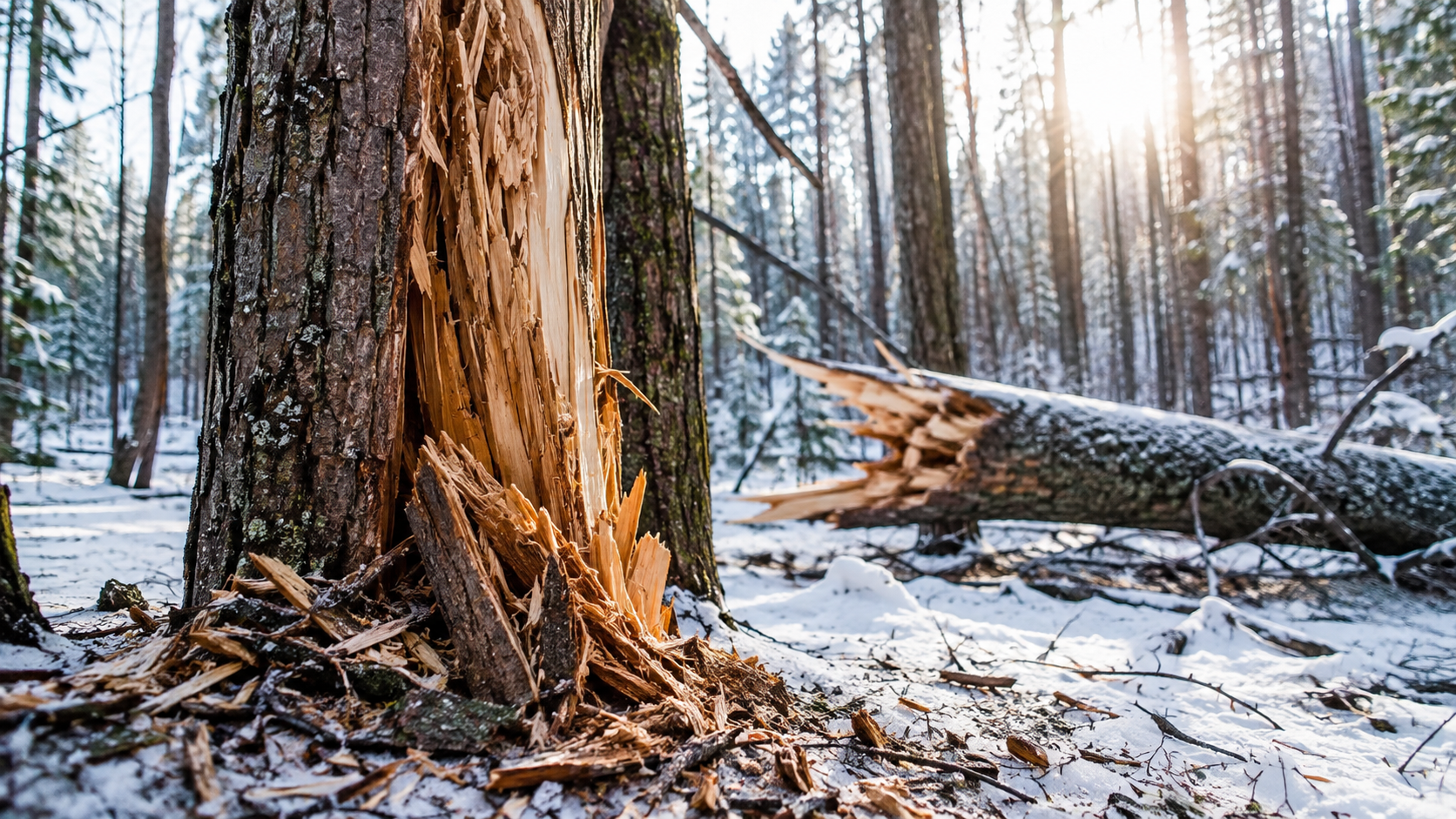
“Exploding trees” describes a real winter phenomenon called frost cracking, not trees actually bursting apart. When temperatures drop rapidly, water and sap inside a tree freeze and expand, building pressure inside the trunk. That pressure can cause a sudden, loud crack, sometimes as loud as a gunshot, as the bark and outer wood split. Full-on tree explosions are extremely rare.
What’s Actually Happening: Frost Cracking Explained
How Freezing Sap Creates Pressure
Trees rely on sap to survive winter, and that sap is largely made of water. When outdoor temperatures fall sharply, the water inside a tree’s trunk can freeze and expand, the same way water expands when it turns to ice in a freezer. Because that expansion happens inside a confined space, wrapped in bark and wood fiber, the pressure has nowhere to go. Eventually, something has to give, and the tree’s outer layers split under the strain, often producing a loud, sudden bang.
Supercooling and Sudden Temperature Swings
The sap inside trees is often thicker and more concentrated than plain water, which allows it to stay liquid at temperatures below the normal freezing point, a state scientists call supercooling. When conditions get cold enough, that supercooled sap can suddenly freeze and expand all at once, rather than gradually. This is part of why frost cracking tends to strike quickly and dramatically rather than building up slowly.
Frost cracking is especially common after big temperature swings, such as a relatively mild or sunny day followed by a sharp overnight drop. On clear winter days, sunlight can warm and slightly expand a tree’s outer cells, and when temperatures then plunge after sunset, the rapid contraction and refreezing adds extra stress to the trunk.
Uneven Cooling Between Inner and Outer Wood
Frost cracks can also form because the outside of a tree cools faster than its interior. When the tree’s exterior gets much colder than its inner wood, the outer bark and cell layers contract more quickly than the wood underneath, creating what experts call unequal contraction. That mismatch in how fast different layers of the tree shrink can also produce the loud cracking sound associated with this phenomenon.
Why “Exploding” Is a Bit of an Exaggeration
Despite the dramatic name, foresters and horticulture experts are quick to point out that trees don’t actually explode the way the term implies. Bert Cregg, a professor of horticulture at Michigan State University, has explained that what people are hearing is properly called ice cracking or frost cracking, and that anyone in the woods when it happens doesn’t need to worry about wood fragments flying through the air.
Bill McNee, a forest health specialist with the Wisconsin Department of Natural Resources, has said it would be extremely rare for a tree to fully burst apart from frost cracking. In most cases, the crack simply becomes a permanent, visible split that stays part of the tree rather than causing it to shatter.
It’s also worth noting that a portion of the viral “exploding tree” content circulating on social media during extreme cold snaps has turned out to be AI-generated, which has added to public confusion about how dramatic this phenomenon actually is in real life.
Which Trees Are Most at Risk
Frost cracking doesn’t affect every tree equally. Certain species are more prone to it than others, including maples, apples, horse chestnuts, walnuts, willows, green ash, box elder, chokecherry, and birch. Trees with thin bark, young trees, and non-native species planted outside their natural climate range also tend to be more vulnerable, since they may be less adapted to sudden, extreme temperature swings.
Interestingly, trees that are naturally suited to consistently cold climates have developed traits that reduce this risk. Cold-adapted trees often have smaller water-conducting vessels and higher concentrations of natural antifreeze compounds, such as sugars like sucrose and raffinose, which help their sap resist sudden freezing. Many of these trees also enter winter dormancy earlier in the fall and delay becoming active again in spring, which limits how much time they spend vulnerable to damaging freeze-thaw cycles.
What to Do If You Hear or See Frost Cracking
Step 1: Listen for the Signs
Frost cracking often produces a loud bang or crack, sometimes compared to a gunshot or a car backfiring, especially during or right after a sharp temperature drop. Hearing this sound near your property during extreme cold is a signal to check your trees once it’s safe to do so.
Step 2: Inspect Trees for Visible Cracks
Look for long, vertical cracks running along the trunk, along with bulges or splits in the bark. These cracks can appear suddenly and may run a significant length of the tree.
Step 3: Assess Whether It’s a Safety Hazard
Not every frost crack means a tree is in danger of falling, but severe cracking can weaken a tree’s structure over time. If a crack looks deep, wide, or is affecting a large portion of the trunk, it’s worth having a certified arborist evaluate the tree, particularly if it’s near a home, driveway, or area where people walk or park.
Step 4: Watch for Long-Term Effects
Frost cracks can create openings where fungi and insects get into the tree, potentially leading to internal decay over time. This can make an affected tree more likely to lose branches or fail during future storms, high winds, or heavy snow and ice events, even if the original crack didn’t cause immediate damage.
Common Misconceptions About Exploding Trees
Misconception: Trees shatter into pieces like a bomb going off. In reality, frost cracking almost always results in a long crack or split, not a tree breaking apart into fragments. True full-tree explosions are considered extremely rare by forestry experts.
Misconception: Any tree can experience this in any freeze. Frost cracking is far more common in certain species, especially thin-barked and non-native trees, and typically requires genuinely extreme cold or a sharp temperature swing, not just an ordinary winter freeze.
Misconception: A cracked tree will always die or need to be removed. Many trees survive frost cracking and heal over time, forming a visible scar or seam where the crack occurred. Removal isn’t always necessary; a professional assessment is a better first step than assuming the worst.
Misconception: All viral exploding tree videos are real. Some of the dramatic footage that circulates during cold snaps has been identified as AI-generated content, which has exaggerated how common and violent this phenomenon actually looks in practice.
Real-World Example
During a severe cold snap in the northeastern United States, with overnight lows between -10 and -20 degrees Fahrenheit, residents in central New York reported hearing loud cracking noises throughout their neighborhoods. Local meteorologists confirmed this was frost cracking driven by the extreme temperatures, and advised residents to inspect trees on their property for cracks or bark bulges before the next expected cold snap, since existing cracks can worsen with repeated freeze-thaw stress.
Key Facts
- The scientific term for “exploding trees” is frost cracking, sometimes also called ice cracking.
- Frost cracking happens when water and sap inside a tree freeze, expand, and create internal pressure that splits the bark and outer wood.
- The sound produced can be as loud as a gunshot or a car backfiring.
- Frost cracking is more common in thin-barked, young, or non-native trees, including maples, birches, and willows.
- Cold-adapted tree species have natural defenses, including antifreeze-like sugars, that reduce their risk.
- True full-tree explosions are considered extremely rare by forestry experts.
- Frost cracks can lead to fungal growth and internal decay if left unaddressed.
- Some viral “exploding tree” videos have been identified as AI-generated rather than real footage.
Frequently Asked Questions
Q1: What causes exploding trees?
Ans: The phenomenon, properly called frost cracking, happens when water and sap inside a tree freeze rapidly during extreme cold, expanding and creating internal pressure that splits the tree’s bark and outer wood.
Q2: Do trees really explode?
Ans: Not in the literal sense of shattering apart. What people hear is a loud crack from frost cracking, which is dramatic but almost never results in a tree fully bursting into pieces.
Q3: How cold does it need to be for frost cracking to happen?
Ans: It typically requires sustained extreme cold, often well below freezing, combined with a rapid temperature drop, such as after a relatively mild or sunny day.
Q4: Which trees are most likely to experience frost cracking?
Ans: Thin-barked and non-native species are especially vulnerable, including maples, apples, walnuts, willows, birches, and box elder trees.
Q5: Is a tree with a frost crack dangerous?
Ans: Not always, but severe or deep cracks can weaken a tree’s structure over time and may create entry points for decay. Having an arborist assess a significant crack is a reasonable precaution.
Q6: Will a tree survive frost cracking?
Ans: Many trees do survive and heal over time, though the crack may remain visible as a permanent scar or seam in the trunk.
Q7: Are exploding tree videos on social media real?
Ans: Some are genuine footage of frost cracking, but researchers have identified a portion of viral clips as AI-generated, which has contributed to exaggerated claims about the phenomenon.
Key Takeaways
- “Exploding trees” is a dramatic nickname for a real but less violent phenomenon called frost cracking.
- Frost cracking happens when freezing sap and water expand inside a tree’s trunk, creating pressure that splits the bark.
- Certain species, especially thin-barked and non-native trees, are more prone to this than others.
- Full tree explosions are extremely rare, despite how the term sounds.
- Cracked trees often survive, but significant cracks are worth having assessed by an arborist.
- Some viral footage of this phenomenon has been confirmed as AI-generated rather than authentic.
Conclusion
“Exploding trees” makes for a striking headline, but the underlying science is straightforward: extreme cold causes sap and water inside a tree to freeze and expand, and that pressure eventually forces a sudden, loud crack in the bark and wood. While the sound can be startling and the damage sometimes serious, true explosions are rare, and many affected trees recover over time. If you notice a fresh crack in a tree after a hard freeze, keeping an eye on it, and getting a professional opinion if it looks severe, is the most useful next step.
Lonnie Ali: The Woman Behind Muhammad Ali’s Later Years
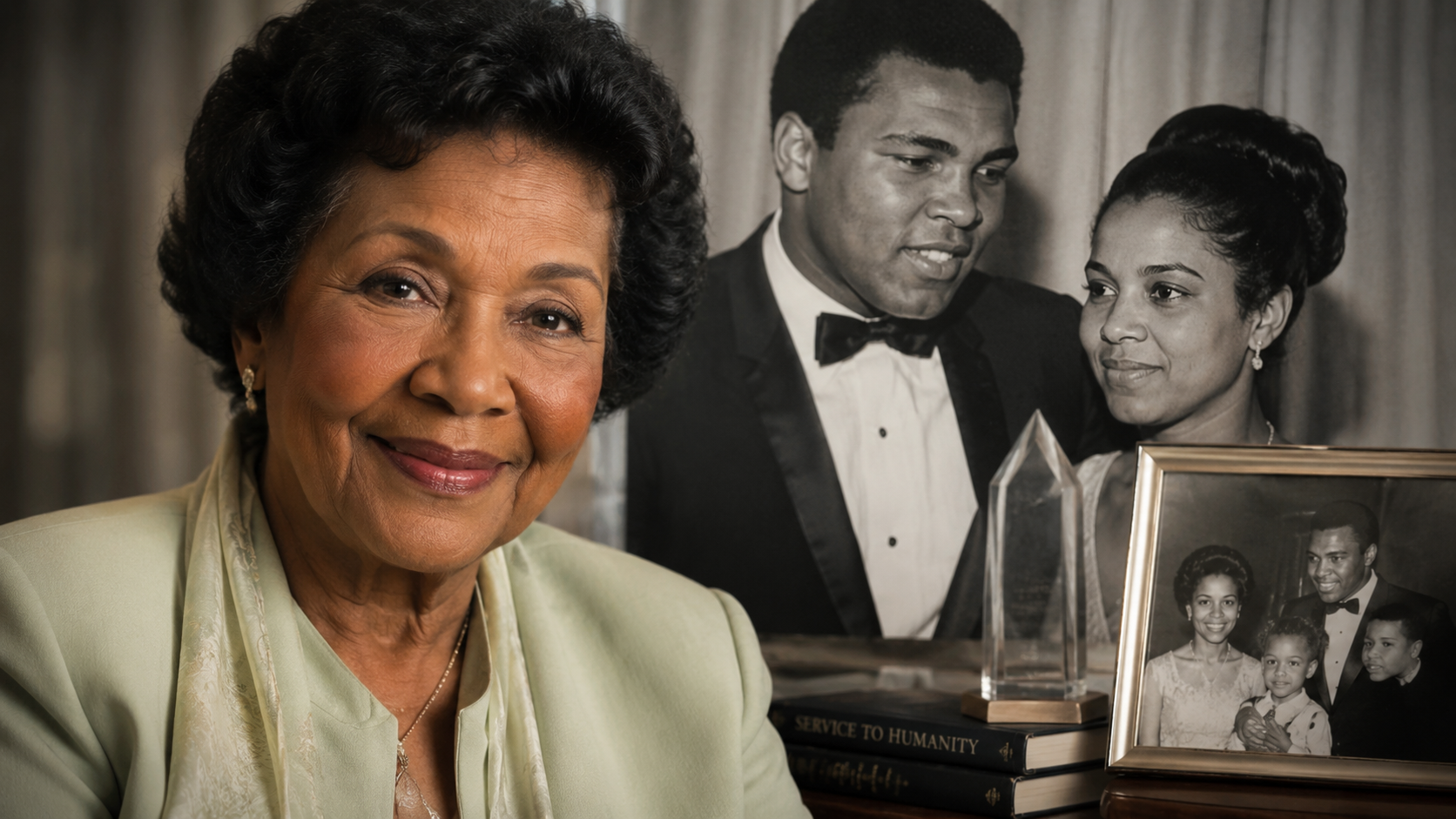
When people search for Lonnie Ali, they’re usually trying to understand her connection to Muhammad Ali beyond the headline of “wife.” Her story includes decades of caregiving, business management, and public advocacy that go well past a marriage announcement. This article lays out who she is, how she and Ali built their life together, and what she’s done since his death in 2016.
Direct Answer: Who Is Lonnie Ali?
Lonnie Ali, born Yolanda Williams in 1957 in Louisville, Kentucky, was the fourth and final wife of boxing legend Muhammad Ali. They married on November 19, 1986, after she had already become his primary caregiver in the early 1980s. Lonnie managed Ali’s business affairs through a company called G.O.A.T. Inc., helped found the Muhammad Ali Center, and remains active in Parkinson’s disease advocacy today.
Early Life and Connection to Muhammad Ali
Lonnie grew up on the same street as Muhammad Ali in Louisville. Their mothers, Marguerite Williams and Odessa Clay, were close friends, and the two families spent time together at gatherings and dinners for years. Lonnie was around six years old when her family settled in that Louisville neighborhood, while Ali, then still known as Cassius Clay, was already an adult in his early twenties.
Because of that age gap, their early relationship looked nothing like a romance. Ali was more like an older family friend who occasionally stopped by for dinner and spent time with the neighborhood kids. It wasn’t until Lonnie reached her late teens that the friendship began shifting into something deeper.
Lonnie went on to attend Vanderbilt University in Nashville, earning a bachelor’s degree in psychology in 1978. Afterward, she worked briefly as an employment counselor for the state of Kentucky before moving into a sales role with Kraft Foods, gaining early experience in the corporate world that would later prove useful.
Becoming Muhammad Ali’s Caregiver
By the early 1980s, Ali’s health had started to decline. He had retired from boxing after a difficult final fight against Larry Holmes in 1980, and doctors had diagnosed him with Parkinson’s syndrome, a condition that affects movement and speech.
In 1982, Lonnie relocated to Los Angeles to become Ali’s primary caregiver. In exchange, Ali agreed to fund her graduate education. She used that opportunity to attend UCLA’s Anderson School of Management, earning an MBA with a focus in marketing in 1986, the same year she and Ali married.
This period marked a turning point in Lonnie’s role in Ali’s life. She wasn’t simply a companion. She was learning the skills that would let her manage his business affairs at a level few people close to him could match.
Marriage and Family Life
Muhammad Ali and Lonnie married on November 19, 1986, at the private home of Harvey Sloane, a former mayor of Louisville. She was his fourth wife, following his marriages to Sonji Roi, Belinda Boyd (later known as Khalilah Ali), and Veronica Porché. Lonnie converted to Islam around the time of the wedding, reflecting the faith Ali had practiced since the 1970s.
The couple adopted a son, Asaad Amin, when he was five months old. While Ali had several biological children from earlier relationships and marriages, Asaad was the only child Lonnie and Ali raised together as a couple from infancy.
Their marriage lasted until Ali’s death on June 3, 2016, in Scottsdale, Arizona, following complications from septic shock brought on by his long battle with Parkinson’s disease. By the time of his death, they had been married for nearly 30 years.
Managing Muhammad Ali’s Business Affairs
One of Lonnie’s most significant contributions was bringing structure to Ali’s business interests. In September 1992, she incorporated Greatest of All Time, Inc., widely known as G.O.A.T. Inc., to centralize and license Ali’s name, image, and intellectual property for commercial use.
Before this, Ali’s likeness and brand had been used in a scattered, informal way by various parties. Lonnie’s company consolidated licensing under one structure, which made it easier to protect Ali’s image and generate consistent income from endorsements and partnerships. She served as Vice President and Treasurer of G.O.A.T. Inc. until the company was sold in 2006. The business was later folded into Muhammad Ali Enterprises, which continues to manage licensing today under Authentic Brands Group.
Beyond the paperwork and licensing deals, Lonnie also traveled with Ali on business trips and humanitarian missions around the world, acting as both a business partner and a caretaker during a period when his health made independent travel difficult.
Building the Muhammad Ali Center and Parkinson’s Advocacy
In November 2005, Lonnie and Muhammad opened the Muhammad Ali Center in Louisville, a museum and cultural center built around themes of respect, confidence, conviction, and giving back to the community. Lonnie has served as a Lifetime Director and Vice Chair of the Center’s board, and in recent years she has taken on the role of Interim President and CEO.
Parkinson’s disease research became another major focus for the couple. In 1997, they helped launch the Muhammad Ali Parkinson Center in Phoenix, Arizona, a facility dedicated to treating patients and researching the disease that had shaped so much of Ali’s later life. In 2009, they unveiled the Muhammad and Lonnie Ali Pavilion, which now houses that center within the Barrow Neurological Institute.
Lonnie has continued this advocacy since Ali’s death, working with organizations including the Michael J. Fox Foundation and speaking regularly at Parkinson’s research and caregiver support events. She has also served on national bioethics panels, including the Presidential Commission for the Study of Bioethical Issues from 2010 to 2013.
Awards and Recognition
Lonnie’s contributions have been recognized with several honors over the years, including:
- AARP’s Inspire Award in 2010
- A spot on Arizona’s list of 48 Most Intriguing Women in 2012
- Induction into the National Consortium for Academics and Sports Hall of Fame in 2013
- The Bell Award from the Mayor of Louisville in 2025
- The Rosie the Riveter Award from the Louisville Metro Council’s Women’s Caucus in 2026
She has also received recognition from organizations such as the Foundation of Wesley Woods, Child Help, and the HollyRod Foundation for her charitable work.
Common Misconceptions About Lonnie Ali
Misconception: Lonnie was only known as Ali’s wife with no career of her own. In reality, she built and ran a licensing company, held an MBA from a top business school, and continues to sit on boards and lead nonprofit work today.
Misconception: Lonnie and Ali had biological children together. They did not. They adopted their son, Asaad Amin, when he was an infant. Ali’s other children came from earlier relationships and marriages.
Misconception: Lonnie stepped away from public life after Ali’s death. She has remained active, including producing documentary and biopic projects tied to Ali’s legacy and continuing her Parkinson’s advocacy work.
Misconception: “Lonnie” is a nickname unrelated to her birth name. Lonnie is a shortened version of Yolanda, her given first name, not an unrelated stage name or invented identity.
Real-World Examples of Lonnie’s Role
At the 2012 Summer Olympics opening ceremony in London, Ali served as a titular bearer of the Olympic flag. Because Parkinson’s disease had made it difficult for him to stand unassisted, Lonnie was the one who helped him rise and stand before the flag, a moment that illustrated her role as both his public partner and personal caregiver in his final years.
When G.O.A.T. Inc. was formed in 1992, it addressed a real problem many retired athletes face: losing control over how their name and image get used commercially. By consolidating licensing under one company, Lonnie created a model that protected Ali’s brand and ensured the family retained meaningful control over it, a structure that carried on even after the company itself was sold.
Key Facts About Lonnie Ali
- Born Yolanda Williams in 1957 in Louisville, Kentucky
- Earned a BA in psychology from Vanderbilt University in 1978
- Earned an MBA from UCLA’s Graduate School of Management in 1986
- Became Muhammad Ali’s primary caregiver in 1982
- Married Muhammad Ali on November 19, 1986, as his fourth wife
- Founded G.O.A.T. Inc. in 1992 to manage Ali’s licensing
- Helped open the Muhammad Ali Center in Louisville in 2005
- Helped launch the Muhammad Ali Parkinson Center in Phoenix in 1997
- Continues Parkinson’s disease advocacy and serves on the Ali Center’s board today
Frequently Asked Questions
Q1:Who is Lonnie Ali?
Ans: Lonnie Ali is the fourth and final wife of boxing legend Muhammad Ali. She managed his business affairs, served as his caregiver during his battle with Parkinson’s disease, and remains active in charitable and advocacy work.
Q2: When did Lonnie Ali marry Muhammad Ali?
Ans: They married on November 19, 1986, at the private home of former Louisville mayor Harvey Sloane.
Q3: Did Lonnie and Muhammad Ali have children?
Ans: They did not have biological children together, but they adopted a son named Asaad Amin when he was five months old.
Q4: What is G.O.A.T. Inc.?
Ans: G.O.A.T. Inc., short for Greatest of All Time, Inc., was a company Lonnie incorporated in 1992 to centralize and license Muhammad Ali’s name, image, and intellectual property. She served as its Vice President and Treasurer until it was sold in 2006.
Q5: Is Lonnie Ali still involved with the Muhammad Ali Center?
Ans :Yes. She serves as a Lifetime Director and Vice Chair of the board and has also served as Interim President and CEO.
Q6:What causes does Lonnie Ali support today?
Ans :She remains a prominent advocate for Parkinson’s disease research and caregiver support, and she continues charitable work tied to preserving Muhammad Ali’s legacy.
Key Takeaways
- Lonnie Ali met Muhammad Ali as a child in Louisville, and their relationship grew into marriage decades later.
- She became his primary caregiver in 1982 before their 1986 marriage.
- She managed Ali’s licensing and business affairs through G.O.A.T. Inc. for over a decade.
- She helped establish the Muhammad Ali Center and the Muhammad Ali Parkinson Center.
- She continues Parkinson’s advocacy and legacy-related work today.
Conclusion
Lonnie Ali’s story goes far beyond being known as a boxing legend’s spouse. From childhood friend to caregiver to business manager, she built a working partnership with Muhammad Ali that shaped both his final decades and the institutions that now preserve his legacy. Her continued work in Parkinson’s research and public advocacy shows that her role in that story didn’t end when Ali passed away in 2016.


Sam Huntington: Career, Roles, and Life Today

Jason London: Career, Life, and Notable Roles

Ronaldo Net Worth: How Rich Is Cristiano Ronaldo?

Is Netanyahu Dead? The Viral Rumor, the Facts, and How It Spread

How to Unclog a Toilet: Proven Methods That Actually Work

Trump appoints Erika Kirk Air Force: Fact Check, Context, and What’s Actually Known
-
 Politics4 months ago
Is Netanyahu Dead? The Viral Rumor, the Facts, and How It Spread
-
 Home4 months ago
How to Unclog a Toilet: Proven Methods That Actually Work
-
 News4 months ago
Trump appoints Erika Kirk Air Force: Fact Check, Context, and What’s Actually Known
-
 Technology2 months ago
Area Code 505: Location, Cities & Full Guide
-

 Lifestyle4 months ago
Semicolon Tattoo Meaning: What It Represents and Why People Get It
-
 Celebrity News4 months ago
Hannah Selleck: Who She Is, Her Equestrian Career, and Life Beyond Hollywood
-

 Lifestyle2 months ago
Hailey Summers: Who Is Shai Gilgeous-Alexander’s Wife?
-
 Sports2 months ago
Maryland vs Wisconsin: 2026 Game Recap and Key Stats