Politics
Is Netanyahu Dead? The Viral Rumor, the Facts, and How It Spread

Introduction
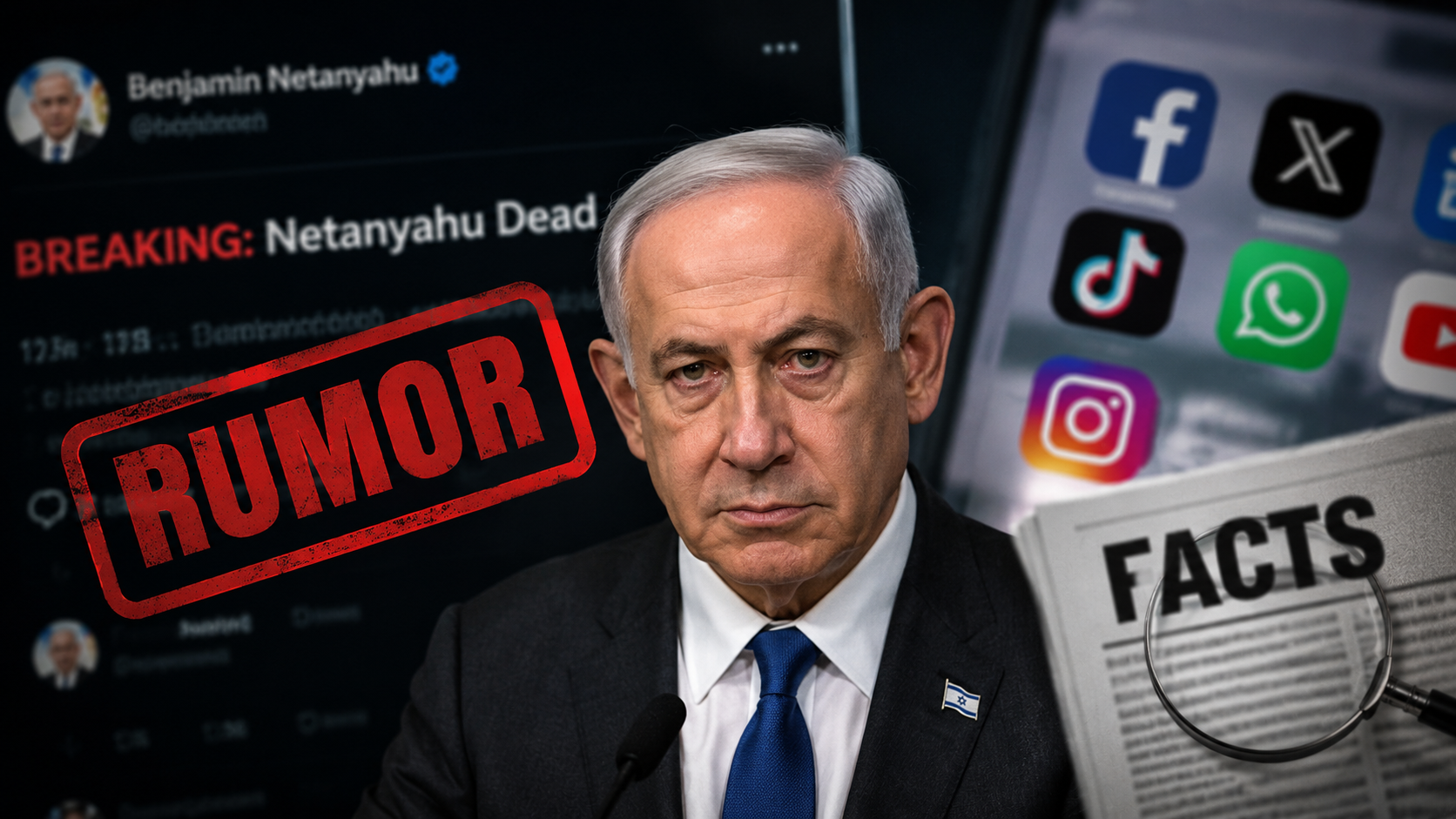
If you searched “Netanyahu dead,” you’re not alone. In early 2026, that phrase was typed millions of times across the world as rumors spread rapidly on social media claiming that Israeli Prime Minister Benjamin Netanyahu had been killed. The claims were dramatic, the posts were convincing to some, and the story gained traction even after Netanyahu himself appeared on camera.
So what actually happened? This article breaks down the facts clearly — where the rumor came from, why it spread so far, what the verified evidence shows, and how to think critically about similar claims in the future.
Direct Answer
Benjamin Netanyahu is not dead. As of 2026, he is alive and serving as Prime Minister of Israel. The claim that he was killed, particularly in an Iranian missile strike, was widely debunked by fact-checkers, verified by live video appearances, and confirmed by multiple independent sources, including Reuters and NBC News. The rumor spread due to a combination of real military tensions, out-of-context footage, and AI-generated misinformation.
What Started the “Netanyahu Dead” Rumor?
The rumor didn’t appear out of nowhere. It grew from a mix of genuine news events and deliberately misleading content shared online.
The Real Context: Israel-Iran Escalation
In late February and early March 2026, the Middle East saw a significant military escalation. Reports emerged that Iran’s Supreme Leader, Ayatollah Ali Khamenei, had been killed in a joint U.S.-Israeli strike. Iran responded with retaliatory missile barrages targeting Israel. The Islamic Revolutionary Guard Corps (IRGC) publicly claimed it had targeted Netanyahu’s headquarters.
That real geopolitical backdrop made the rumor feel plausible to many people who were already following the conflict closely.
How the Rumor Snowballed
According to reporting by Poynter, the false claims began picking up momentum around March 9, 2026. Posts on X (formerly Twitter), Facebook, TikTok, and other platforms claimed that Netanyahu had been killed in the Iranian strikes. Some posts circulated footage purportedly showing “grief inside Israeli underground bunkers” following his death.
Others took a different angle. Videos of Netanyahu giving a televised address were shared alongside claims that the footage was AI-generated. One widely shared post claimed Netanyahu appeared to have six fingers on one hand — supposedly a sign the video was created by artificial intelligence. That specific claim was later debunked by Snopes.
Data from Rolli IQ, a social media monitoring tool, showed the phrase “Netanyahu is dead” appeared over 218,000 times across major platforms between March 9 and March 17, 2026.
What the Evidence Actually Shows
Netanyahu Appeared Live and in Person
On March 12, 2026, Netanyahu held a news conference that was broadcast live on X and by multiple media outlets simultaneously. That same day, he posted a video of himself in a café, directly responding to the rumors.
On March 17, he posted another video showing him walking down a hallway alongside U.S. Ambassador to Israel Mike Huckabee. In the footage, Huckabee is heard saying, “Mr. Prime Minister, I wanted you to know the president asked me to come and make sure you were okay.” Earlier, on the evening of March 2, Netanyahu had appeared live on Fox News in an interview addressing the regional conflict with Iran.
These were not recorded clips easily edited or taken out of context. They were live broadcasts and verifiable public appearances.
The AI Claims Were Investigated and Rejected
GetReal Security, a deepfake detection company co-founded by University of California, Berkeley professor Hany Farid, analyzed the coffee shop video’s audio and visuals and found no signs that it had been generated or manipulated with AI software.
Additionally, analysis of the video showed that a date displayed on a terminal visible in the background was consistent with 2026 — not 2024, as some conspiracy-adjacent posts were suggesting.
The Six-Fingers Claim Was False
Snopes investigated and debunked the claim that Netanyahu appeared with six fingers in the video — a tell that would suggest AI generation. The analysis found no such anomaly.
Why Did So Many People Believe It?
Understanding why misinformation spreads helps people recognize it more quickly next time.
Real events provided cover
The Israel-Iran military escalation was genuine. When real violence is happening, people are primed to believe dramatic claims. The IRGC’s public statement that it had targeted Netanyahu’s headquarters added fuel.
Social media rewards engagement, not accuracy
Posts claiming a world leader is dead generate enormous engagement — shares, comments, emotional reactions. Platforms amplify content that gets interaction, regardless of whether it’s true.
AI deepfake anxiety is real
People are genuinely uncertain about whether videos can be trusted anymore. That legitimate concern was exploited to cast doubt on real, verified footage of Netanyahu. By preemptively accusing genuine videos of being deepfakes, bad actors made it harder for audiences to distinguish real from fake.
The absence of immediate information felt suspicious
In the early hours after rumors began, there was a brief gap before Israeli officials responded publicly. For some online users, that delay felt like confirmation something was being hidden — even though institutional response always takes time.
How Misinformation Like This Spreads: A Closer Look
This episode follows a pattern that appears repeatedly with viral death rumors and political misinformation.
It usually starts with a real event that creates uncertainty. Then unverified claims fill the information vacuum, often with emotional visual content that’s difficult to quickly verify. Once a claim reaches a certain threshold of shares, it becomes self-reinforcing — people assume something this widely shared must have some truth to it.
Adding AI manipulation claims to real footage is a particularly effective tactic. It creates a kind of epistemic trap: real videos get accused of being fake, while actual fake content gets treated as evidence.
The Netanyahu death rumor was a high-profile example of what NBC News described as “the clouded and exceedingly fraught information environment created by the mix of AI and social media.”
This Wasn’t the First Time
Celebrity and political death hoaxes are not new. A well-documented pattern of fake death reports has affected public figures for years.
Netanyahu himself was the subject of a separate, unrelated death hoax circulated in June 2026, which was quickly debunked. His representatives confirmed publicly that the claim was false.
In October 2024, Hezbollah launched a drone attack on Netanyahu’s private residence in Caesarea, Israel. Netanyahu was not home at the time. No injuries occurred. That real event — an attempted assassination that failed — may have contributed to an ongoing readiness among some audiences to believe a future attempt might succeed.
Key Facts
- Benjamin Netanyahu was born on October 21, 1949, in Tel Aviv, Israel.
- He has served multiple terms as Prime Minister of Israel, making him the longest-serving PM in Israeli history.
- The claim that he was killed in an Iranian missile strike in March 2026 was false and widely debunked.
- Netanyahu appeared on live broadcasts and posted public videos directly refuting the claims.
- GetReal Security, using professional deepfake detection technology, found no evidence of AI manipulation in Netanyahu’s videos.
- The phrase “Netanyahu is dead” was posted over 218,000 times on social media between March 9–17, 2026.
- A separate death hoax also circulated in June 2026 and was similarly debunked.
How to Verify Claims Like This Yourself
When a claim this significant circulates online, a few straightforward steps can help you assess it quickly.
Check major newswires first
Reuters, AP, and AFP have full-time reporters covering Israeli politics. If a sitting prime minister were killed, it would be their top story within minutes.
Look for live footage, not clips
Recorded video clips can be old, edited, or out of context. Live broadcasts on multiple simultaneous channels are much harder to fake at scale.
Find the original source of the claim
Most viral death rumors trace back to one or two anonymous posts or fringe sites. Tracing the claim to its origin often reveals its credibility immediately.
Check established fact-checkers
Organizations like Snopes, PolitiFact, AFP Fact Check, and Poynter’s PolitiFact investigate high-profile claims quickly. Searching the name alongside “fact check” usually surfaces their work within hours of a story breaking.
Be skeptical of AI accusations without evidence
Claiming a video is AI-generated is easy. Proving it requires technical analysis. Don’t dismiss real footage just because someone on social media says it looks fake.
FAQ
Q1: Is Netanyahu dead as of 2026?
Ans: No. Benjamin Netanyahu is alive. Despite widespread viral claims — particularly in March 2026 — multiple live public appearances, independent video analysis, and reporting from major news organizations have confirmed he is alive and serving as Prime Minister of Israel.
Q2: Was Netanyahu killed by an Iranian missile?
Ans: No. The claim that Iran killed Netanyahu in a missile strike was false. It spread widely on social media in March 2026 during a period of genuine military escalation between Israel and Iran, but was debunked by fact-checkers including Snopes, Poynter, and France 24.
Q3: Was Netanyahu’s video response an AI deepfake?
Ans: No. GetReal Security, a professional deepfake detection company, analyzed Netanyahu’s videos and found no signs of AI generation or manipulation. The six-fingered anomaly cited by some online users was also investigated and found to be false.
Q4: Why do death rumors about public figures spread so quickly?
Ans: Death rumors about major political figures spread because they’re emotionally provocative, hard to immediately disprove, and generate massive social media engagement. When real geopolitical tension exists as background context, false claims become easier to believe. Social media algorithms amplify content that gets reactions, regardless of accuracy.
Q5: Has Netanyahu faced real assassination attempts?
Ans: Yes. In October 2024, Hezbollah launched a drone attack on Netanyahu’s private residence in Caesarea, Israel. The drone cracked a bedroom window but caused no injuries. Netanyahu was not home at the time.
Q6: How can I tell if a political death claim is real?
Ans: Check major international wire services like Reuters and AP — they cover political leadership deaths within minutes. Look for live simultaneous broadcasts rather than circulating clips. Search established fact-checkers and look for official government statements. Real deaths of sitting heads of government cannot be concealed from the international press.
Key Takeaways
- Benjamin Netanyahu is alive. The claim that he is dead is false and has been debunked repeatedly.
- The March 2026 death rumor grew from real military tensions between Israel and Iran, but was amplified by out-of-context footage, fake images, and AI-related misinformation.
- Netanyahu appeared live on multiple broadcasts and posted direct video responses addressing the rumors.
- Professional deepfake analysis found no evidence that his videos were artificially generated.
- The rumor spread over 218,000 times on social media in a single week before fact-checkers had fully addressed it.
- Verifying political death claims is straightforward: check major wire services, look for live broadcasts, and consult established fact-checkers.
Conclusion
The “Netanyahu dead” rumor is a case study in how quickly false information can travel — and how a mix of real events, manipulated footage, and social media dynamics can make a debunked claim feel credible to large numbers of people.
Netanyahu is alive. The evidence for that is clear, verified, and sourced from multiple independent outlets. What’s equally worth understanding is the mechanism that made so many people uncertain in the first place. That pattern — real conflict, information vacuum, viral claims, AI accusations — is not unique to this event. Recognizing it is the most effective defense against it.



Sam Huntington: Career, Roles, and Life Today

Jason London: Career, Life, and Notable Roles

Ronaldo Net Worth: How Rich Is Cristiano Ronaldo?

Is Netanyahu Dead? The Viral Rumor, the Facts, and How It Spread

How to Unclog a Toilet: Proven Methods That Actually Work

Area Code 505: Location, Cities & Full Guide
-
 Home4 months ago
How to Unclog a Toilet: Proven Methods That Actually Work
-
 Technology2 months ago
Area Code 505: Location, Cities & Full Guide
-
 News4 months ago
Trump appoints Erika Kirk Air Force: Fact Check, Context, and What’s Actually Known
-

 Lifestyle4 months ago
Semicolon Tattoo Meaning: What It Represents and Why People Get It
-

 Lifestyle2 months ago
Hailey Summers: Who Is Shai Gilgeous-Alexander’s Wife?
-

 Celebrity News4 months ago
Hannah Selleck: Who She Is, Her Equestrian Career, and Life Beyond Hollywood
-

 Sports2 months ago
Maryland vs Wisconsin: 2026 Game Recap and Key Stats
-

 Lifestyle3 months ago
Fluffy Cow 101: Meet the Shaggy Highland Cattle Breed